Most people see an army ant swarm as a moving mass of predators.
Thousands of ants surge across the forest floor, overwhelming insects, spiders, and other small animals in their path. To most observers, the swarm appears chaotic and destructive. Yet hidden within the rushing columns is an entirely different world—one that exists because of the ants but often goes completely unnoticed.
An army ant colony is not simply a predator. It is an ecosystem.
And like all ecosystems, it supports an entire community of organisms that depend on it for survival.
Looking Beyond the Ants
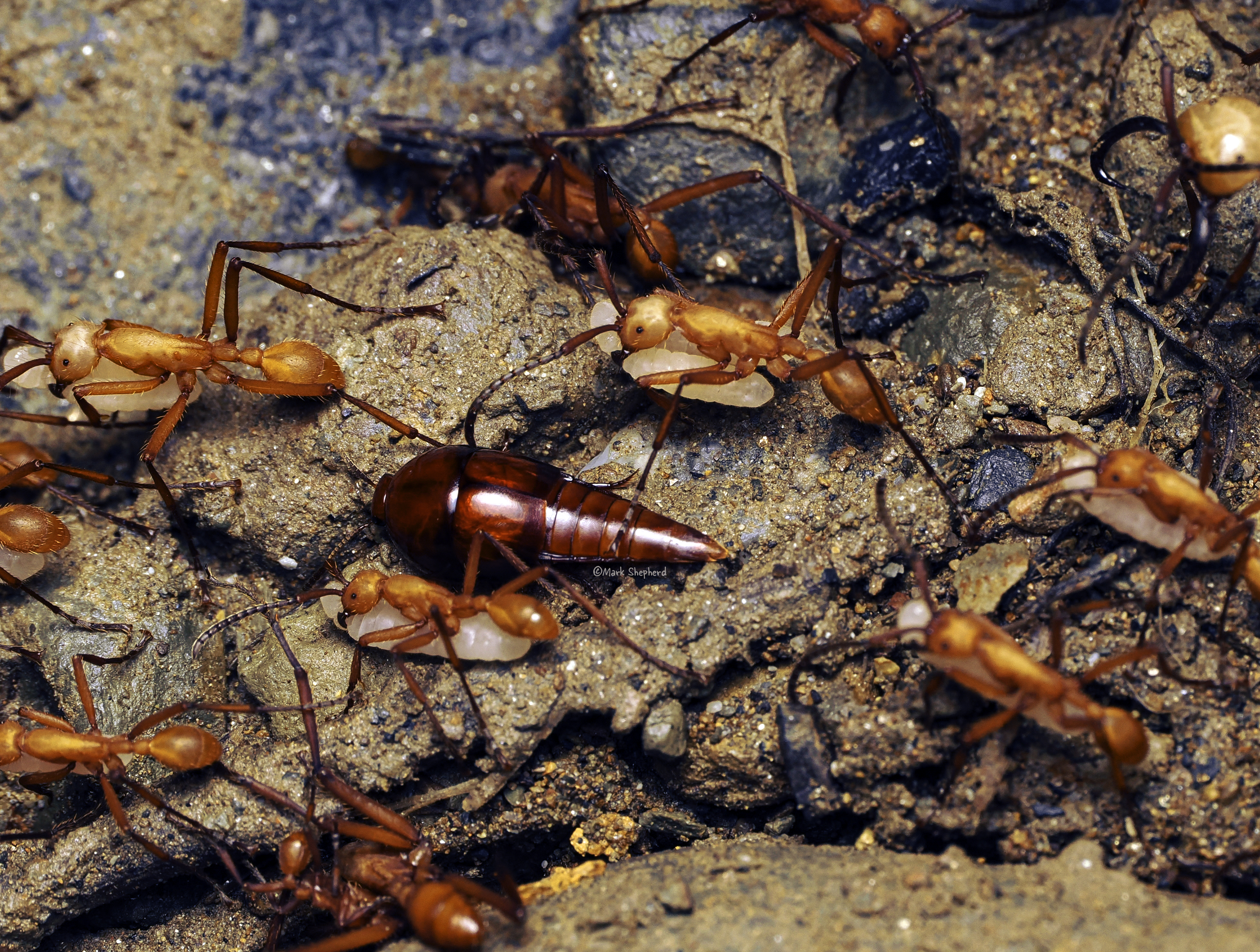
When ecologists first encounter a raid of the army ant Eciton hamatum, the ants dominate attention. Workers carry prey, trails stretch through the forest, and the colony seems to consume everything in its path.
But the ants are only the visible part of the story.
Among the workers move beetles, mites, flies, and other organisms that have evolved to live alongside one of the most aggressive predators in the rainforest. Most people never notice them. Even experienced observers can watch an army ant raid for years before realizing they are there.
These hidden residents are known as inquilines.
Instead of fleeing from the ants, they live among them.
A Mobile World Hidden in Plain Sight
Unlike many ants, Eciton hamatum does not build a permanent nest. The colony forms temporary living shelters called bivouacs made entirely from the bodies of worker ants. Each night the colony may occupy a different location as it moves through the forest.
To the casual observer, the ants appear nomadic.
To the inquilines, they are carrying an entire community through the rainforest.
As the colony moves, countless opportunities move with it. Food, shelter, protection, and transportation all travel inside the swarm.
The army ants are not simply moving through the ecosystem.
They are carrying one.
Life Among Predators
Living inside an army ant colony is dangerous.
Workers attack unfamiliar organisms almost instantly. Any species attempting to live among them must solve a difficult problem: how do you survive among insects programmed to kill intruders?
Many inquilines accomplish this through deception.
Some beetles resemble ants in shape and movement. Others mimic the chemical signals that army ants use to identify nestmates. To the ants, these impostors smell like members of the colony.
The disguise must be nearly perfect.
A mistake can be fatal.
Following the Chaos
Army ant raids create opportunities throughout the forest.
As thousands of workers advance, hidden insects, spiders, and other animals flee from cover. Injured prey, abandoned resources, and scattered remains accumulate behind the swarm.
Many inquilines exploit this temporary abundance.
Some steal food.
Some feed on scraps.
Others consume waste products or dead ants within the colony itself.
The success of the army ants supports an entire secondary community of organisms that most people never see.
The Ecology of the Unseen
Army ant swarms reveal an important lesson about nature.
What we notice is rarely the whole story.
Most observers see the ants. Few notice the organisms living among them. Fewer still recognize that a moving army ant colony functions as a complex ecosystem with its own food web, residents, and ecological interactions.
The rainforest is filled with similar hidden worlds.
A termite nest is more than a nest.
A fallen log is more than dead wood.
An army ant swarm is more than a swarm.
Each contains layers of ecological relationships waiting to be discovered.
The challenge is learning to look beyond the obvious.
Once you do, even a column of ants crossing a forest trail becomes something much larger—a glimpse into an unseen ecosystem moving through the rainforest.
